
The problem
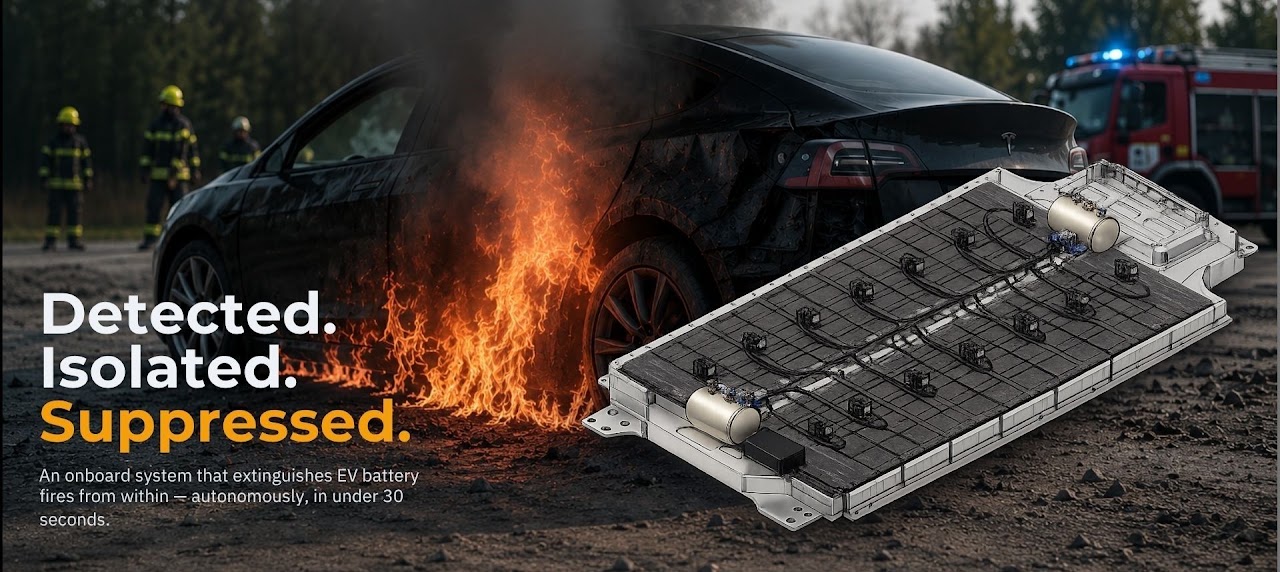
When one lithium-ion cell goes into thermal runaway, its heat spreads to its neighbours and the whole pack can follow. External suppression arrives too late and can't reach the cells. CERES puts the agent inside the module casing and floods only the failing module, before the cascade.
How it works
Aqueous vermiculite dispersion is stored under nitrogen pressure and routed to the one module whose sensors trip. An independent 12 V controller uses both temperature and rate-of-rise thresholds with voting logic, so a single bad sensor can't fire it.
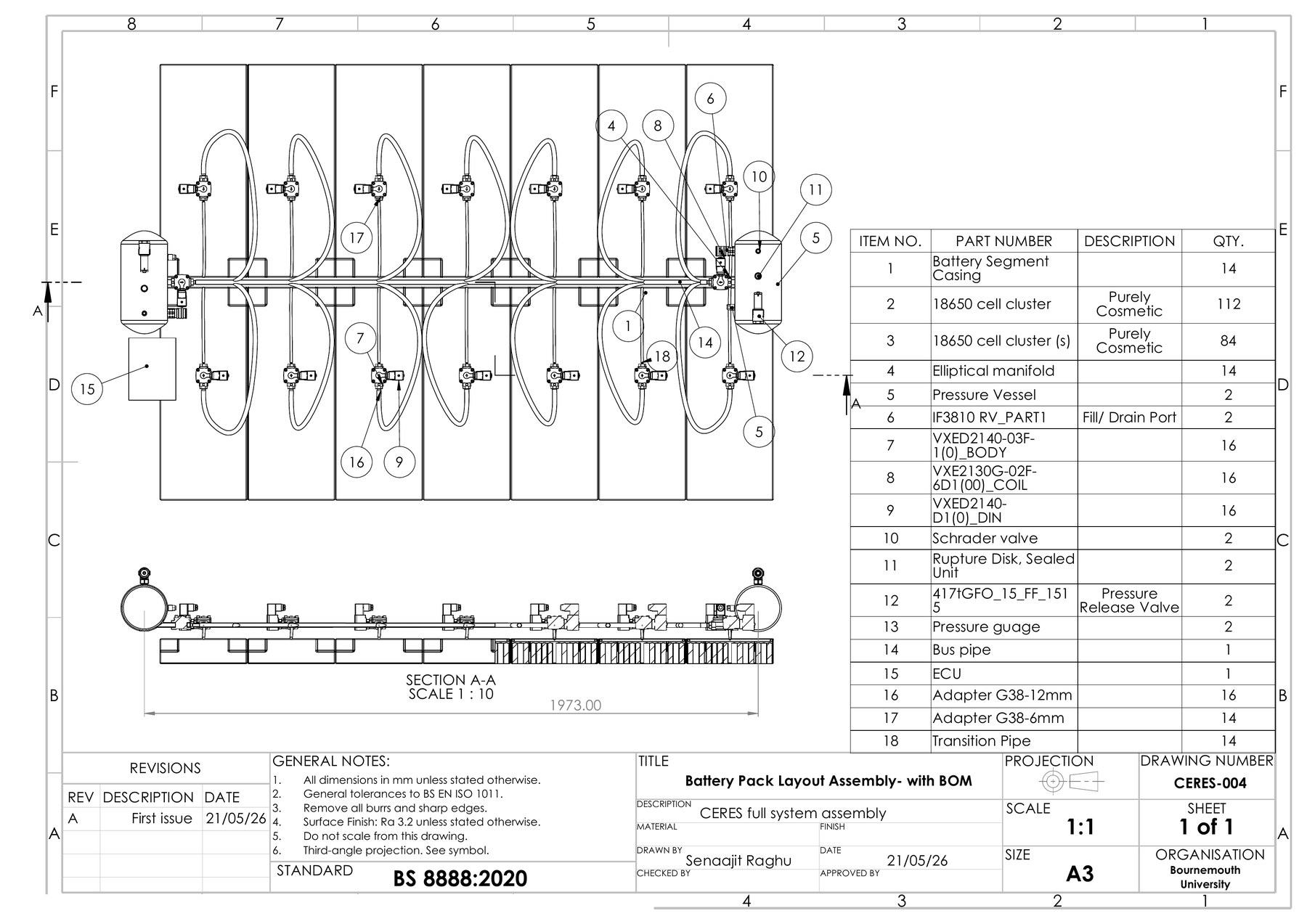
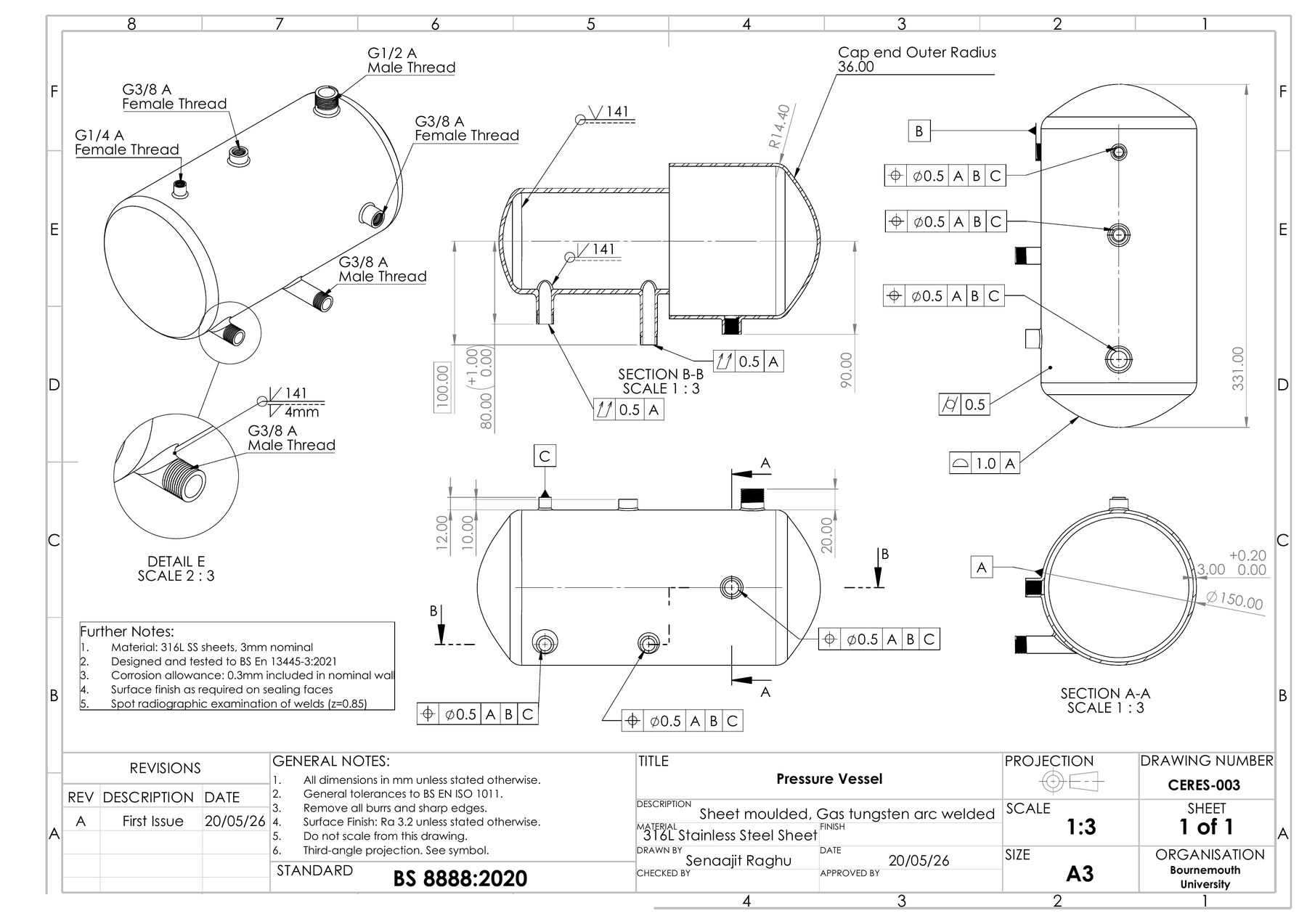
- 01Pressure vessels2 × 316L stainless, AVD under N₂
- 02Primary valvesPilot-operated, normally closed
- 03PFA bus line10 mm ID along the pack
- 04Module valve1 of 16 opens: only the failing module
- 05Cell manifoldElliptical, 43 holes over the cells
Design optimisation
4.54 L
Agent per module
Sized from runaway energy per cell and AVD's heat absorption, with a 1.5 safety factor.
30 s
Full discharge
A 4× margin on the conservative propagation window from the literature.
1.49 → 0.18 MPa
Pressure-loss correction
Flow is turbulent (Re ≈ 10,500), so Darcy-Weisbach replaced the laminar estimate, keeping the design inside the valves' 2.0 MPa rating.
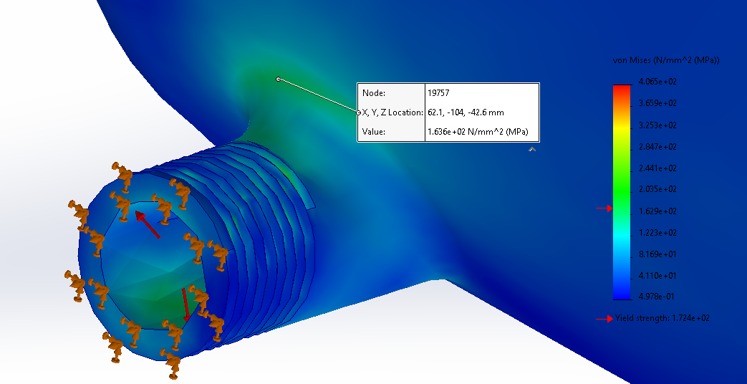
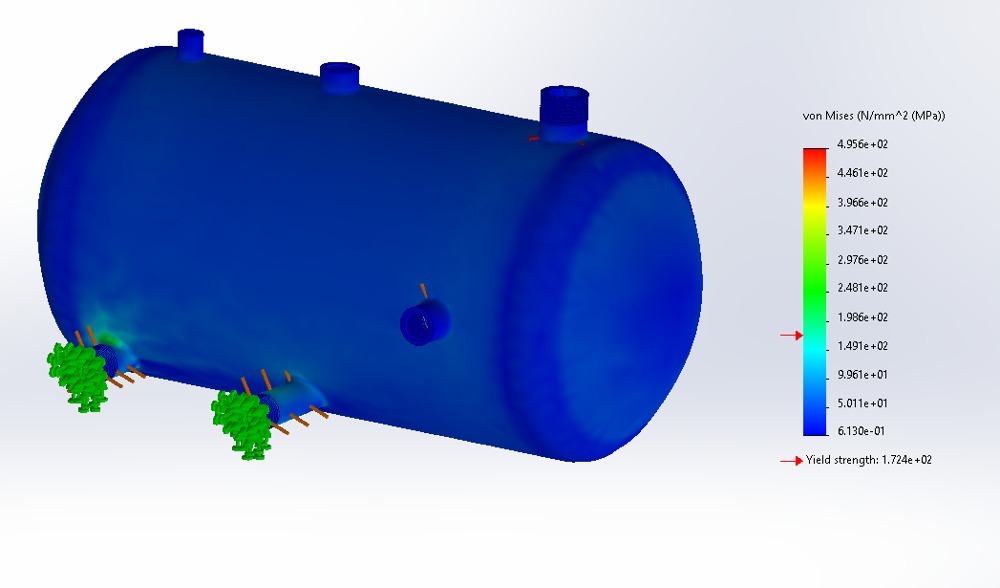
250 → 163 MPa
Weld stress, after redesign
FEA iteration on the vessel's weld detail brought peak stress below 316L's 170 MPa yield. Wall sized to EN 13445-3.
What I'd do next
- ARun the full manifold CFD on HPC; steady-state results suggest uneven flow with viscous AVD, so the hole pattern needs optimising.
- BThermally isolate the valve coils, rated to 60 °C, from the pack.
- CBuild and test a single-module prototype.
Standards: EN 13445-3 · PED 2014/68/EU · BS EN 3 · BS 8888 · ISO 26262 · UNECE R100